Beyond Home and Work: How Chicago's Gathering Spots Hold Neighborhoods Together
Sociologist Ray Oldenburg coined the term 'third place' in the 1980s to describe the spaces beyond home and work where people gather voluntarily, converse freely, and build the loose social ties that make a neighborhood feel like a neighborhood. Few American cities illustrate the concept as vividly as Chicago, a city of 77 community areas, each with its own rhythm, and each rhythm kept by the places where residents linger.
Why These Spaces Matter
Third places are easy to overlook precisely because they are unremarkable. A barbershop where the conversation runs from Aldermanic politics to Bears football. A café where the owner knows which regulars take their coffee black. A branch library whose reading room doubles as a homework hub and, on Thursday evenings, a zoning information session.
Urban researchers have long tied these spaces to measurable civic outcomes: higher rates of voter participation, stronger informal safety networks, and better economic resilience for surrounding small businesses. When a third place closes, the loss is rarely captured in a headline, but it registers in the daily habits of a block.
Three Rooms That Hold the City Together
The South Side Barbershop. In the Greater Grand Crossing neighborhood, a barbershop operating for more than four decades functions as part grooming station, part town hall. Customers waiting for a cut debate everything from property tax assessments to CPS school closures. The owner, like many of his peers across the South and West Sides, quietly serves as an informal counselor, employment broker, and neighborhood historian. Studies of Black barbershops nationally have noted their outsized role in public health outreach, and Chicago shops have hosted everything from blood pressure screenings to voter registration drives.
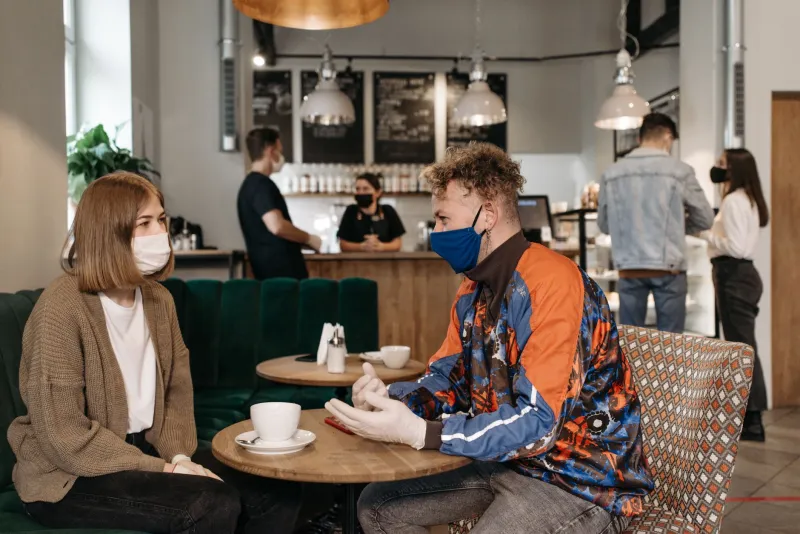
The Northwest Side Café. Along a stretch of Milwaukee Avenue in Avondale and Old Irving Park, family-run cafés and panaderías have become de facto living rooms for a changing population. Longtime Polish-American residents share tables with Mexican-American families and newer arrivals priced out of trendier corridors. The counter at a corner café, where an espresso costs less than a downtown latte and nobody rushes anyone out, performs the social function that expensive co-working spaces attempt to manufacture.
The Branch Library. Chicago Public Library operates 81 neighborhood branches, and many function as the last truly free indoor public space in their vicinity. Branches such as those along the North Lakefront offer more than books: notary services, teen maker labs, English language conversation circles, and warm refuge during weather emergencies. After a national wave of library closures and reduced hours, Chicago's system has remained comparatively robust, a point of quiet civic pride.
A Disappearing Institution
Across the United States, third places are under pressure. Researchers point to a convergence of forces: rising commercial rents, the migration of social life onto screens, car-dependent development patterns, and the lingering post-pandemic habit of staying home. A widely cited 2024 report from the American Enterprise Institute noted that time spent socializing in person has declined sharply among Americans under 35, with young adults socializing roughly a third less than their counterparts did two decades ago.
Independent cafés and bars face particular strain from national chains with deeper capital reserves. Barbershops, often family-operated on thin margins, are vulnerable to commercial displacement as neighborhoods gentrify. And while libraries enjoy broad public goodwill, they compete for municipal dollars in every budget cycle.
Chicago's Response
Local initiatives are pushing back. The City's Neighborhood Opportunity Fund, financed through downtown development agreements, has channeled millions into commercial corridors on the South, West, and Southwest Sides, helping legacy businesses — including cafés, salons, and cultural venues — renovate and remain. Community development corporations such as the Greater Southwest Development Corporation and the Puerto Rican Cultural Center in Humboldt Park have made commercial corridor preservation central to their missions.
Meanwhile, Chicago Ideas and neighborhood chambers of commerce have promoted 'buy local' campaigns, and the Chicago Public Library Foundation continues to fund branch programming that private philanthropy cannot easily replicate elsewhere. Pop-up markets in vacant storefronts, many coordinated through the Department of Planning and Development, give new gathering spaces a low-risk trial run.
Residents, too, play a role that no grant can replace. Third places survive on regularity — the Tuesday regulars, the Saturday morning crowd, the after-school teens. Showing up, spending modestly, and treating the space as shared rather than transactional is the oldest preservation strategy there is.
An Invitation
CG Chicago exists to connect the people, organizations, and businesses that make this city function. That work begins in rooms like these: the shop, the café, the branch library where a neighborhood decides what kind of place it wants to be. The next time you pass one, consider going in. The conversation, like the community it sustains, starts there.