After the Invoice: Chicago's Professional Circles and the Quiet Work of Civic Repair
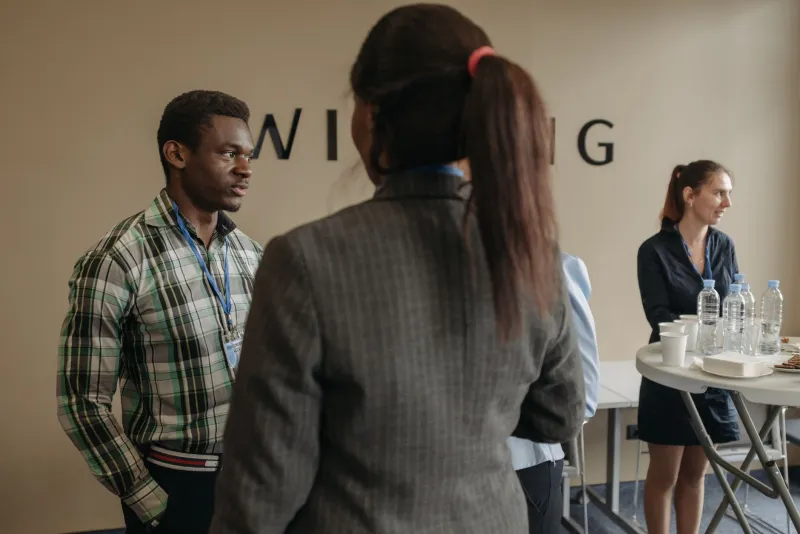
At 5:30 on a Tuesday evening, the elevators of the Loop empty in two directions. Some commuters head for the Metra platforms; others filter into conference rooms on Wacker Drive, untying scarves and opening agendas. The second group belongs to a parallel workforce—one that bills no hours and files no reports, yet shapes the city in ways that outlast any fiscal quarter.
Chicago's trade associations, chambers of commerce, and industry societies have long been understood as career infrastructure. What receives far less attention is their second function: a distributed corps of skilled volunteers whose collective labor quietly underwrites neighborhood projects, scholarship funds, and mentorship pipelines from Bridgeport to Albany Park.
The Economics of Expertise
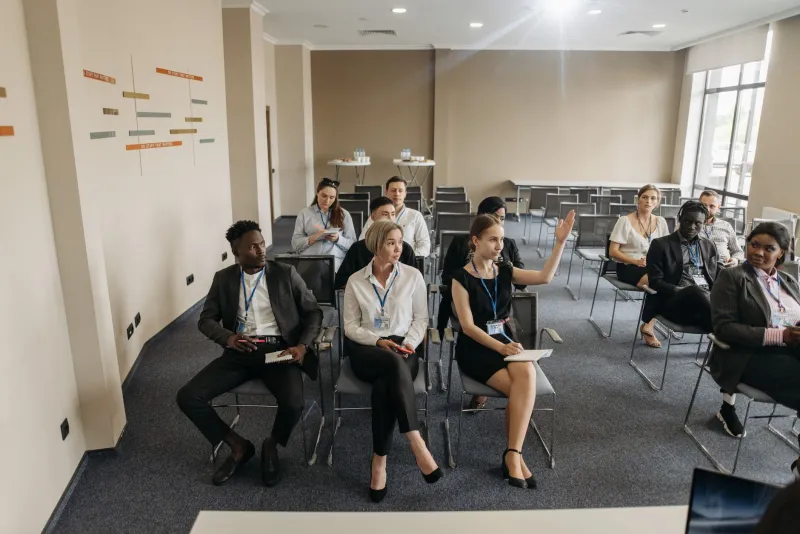
Consider what a typical association chapter actually holds. A single meeting of a local engineering society might gather structural designers, project managers, and permitting specialists—people whose ordinary rate cards would price their advice far beyond the reach of a community development corporation. When those professionals volunteer through their association rather than as individuals, several things change.
First, the commitment becomes durable. Individual volunteering tends to flare and fade with personal schedules; association-based programs institutionalize it. A mentorship pipeline administered by a professional society survives the departure of any single member, because the institution—not the person—carries the obligation.
Second, the expertise is matched, not improvised. A neighborhood nonprofit that needs help reading a zoning variance is better served by an association that can assign a land-use attorney than by a general call for volunteers. Chicago's larger chambers have formalized this matching process, maintaining rosters of members by specialty and fielding requests from community organizations the way a staffing agency fills roles.
Third, the work compounds. Skill-based volunteering—drafting bylaws, building financial models, reviewing leases—leaves behind infrastructure that continues to serve a neighborhood organization long after the volunteer goes home. Painting a fence is valuable; teaching a nonprofit's board to read its own balance sheet changes the trajectory of the organization.
From Causet to Cause: A Brief Institutional History
The pattern is not new. Chicago's ethnic benevolent societies and early trade guilds understood mutual advancement and mutual aid as inseparable. The Polish Highlanders, the building trades councils, and the old Montgomery Ward–era business leagues all operated on the premise that professional success carried obligations to the community that made it possible.
What has changed is the scale and the formality. Contemporary associations increasingly treat civic programming not as an afterthought but as a membership benefit in its own right. Surveys of younger professionals consistently show that opportunities for structured community engagement influence which organizations they join and how long they stay. Associations have responded: scholarship committees, pro bono clinics, high-school internship programs, and financial-literacy workshops now appear on chapter calendars alongside the traditional networking mixer.
The South Side and West Side neighborhoods that experienced the deepest disinvestment over the past half-century have been particular beneficiaries. Partnerships between downtown professional societies and neighborhood business associations have delivered everything from free tax preparation in Englewood to storefront redesign consultations in Pilsen—work that neither party could accomplish alone.
A Practical Guide for the Young Professional
For those early in their careers, the sheer number of options can be paralyzing. A few principles cut through the noise.
Audit your skills before you audit the directory. The most valuable volunteers are not the most enthusiastic but the most specific. If you build spreadsheets for a living, an organization that needs a treasurer's report gets more from you in two hours than a food drive would in two weekends.
Look for the pipeline, not the party. Associations serious about community impact will describe mentorship structures, named programs, and measurable outcomes. Those that mention only galas and mixers are selling social access, which has its place—but it is a different purchase.
Weight proximity and persistence. A program in your own neighborhood, sustained over years, will build relationships that outlast job changes. Chicago's civic life runs on continuity; the person who shows up quarterly for three years accomplishes more than the one who appears annually with a camera crew.
Ask what the community asked for. The healthiest partnerships begin with a neighborhood organization defining its own needs. Be wary of programs that seem designed primarily to make volunteers feel useful.
The Multiplier Nobody Measures
There is no dashboard that captures the aggregate effect of this after-hours economy. No one tallies the scholarship applications reviewed by the insurance society, or the small-business plans critiqued by the marketing association's pro bono committee, or the high schoolers from Little Village who walked into engineering offices because a chapter member answered a phone call.
But the pattern is visible in the institutions themselves. Board seats filled, nonprofit budgets balanced, first-generation college students placed into internships—the accumulation of small professional favors, organized at scale, functions as a form of civic infrastructure that no municipal budget line quite replicates.
The lesson for Chicago's next generation of professionals is straightforward. The association you join at twenty-eight will shape not only your résumé but your city. Choose accordingly, and choose to stay.