Borrowed Ladders and Borrowed Trust: Inside Chicago's Quiet Barter Economy
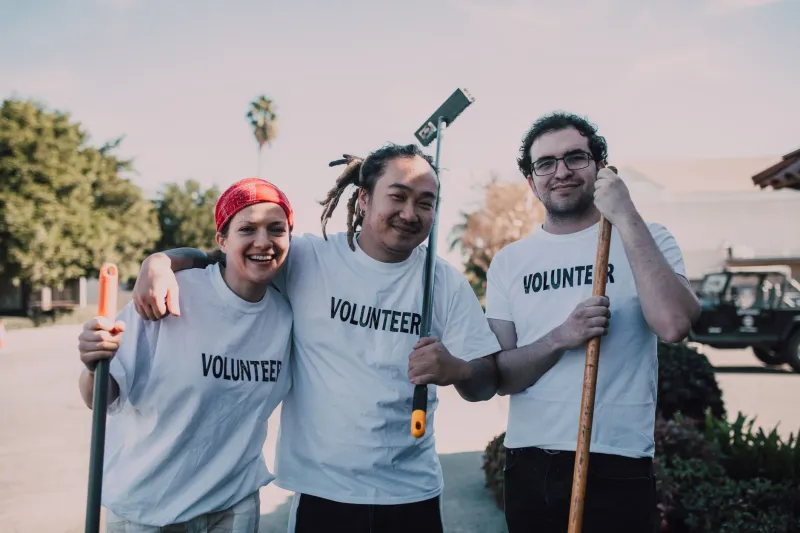
On a Saturday morning in Rogers Park, a retired electrician named Marcus leaves a circular saw with the volunteer at the front desk of a neighborhood tool library. He does not pay a fee. He does not show a membership card. He signs the ledger, chats for a few minutes about a wiring question, and walks home with a borrowed extension ladder he will return in a week.
Transactions like this one are multiplying across Chicago, and they rarely make headlines. Yet taken together, they represent a quiet reorganization of how neighbors relate to one another — an economy built not on wages but on willingness.
An Old Idea Rebuilt for New Conditions
Bartering is hardly novel. What is new in Chicago is the structure: organized swap networks, lending libraries, and skill-exchange circles that operate with the regularity of institutions while remaining informal enough to avoid paperwork and dues.
In Pilsen, a group of freelancers and tradespeople runs a co-working co-op where hours contributed — graphic design, bookkeeping, translation, carpentry — can be logged and redeemed against hours received. In Greater Grand Crossing, a monthly swap meet pairs gardeners with mechanics, tutors with tailors. In Albany Park, a mutual aid network maintains a shared spreadsheet of who can drive, who can sew, and who has a truck.
Organizers describe the model less as commerce than as infrastructure. "The point isn't to avoid money," said one Pilsen coordinator, who asked to be identified only by her first name, Elena. "The point is that when you trade skills, you meet the person. You come back for advice. You show up when their basement floods. A transaction becomes a relationship."
Filling a Vacancy
Civic researchers have long documented the decline of traditional membership organizations — the lodges, leagues, and associations that once stitched American neighborhoods together. Chicago's famous block clubs have thinned in many areas, and formal groups struggle to recruit younger residents who move frequently and guard their free time.
Skill-swap networks appear to be stepping into that vacancy precisely because they ask so little. There is no application, no annual meeting, no minimum contribution. Participation is the membership.
Sociologists call this "low-threshold engagement," and its effects can compound. A borrowed tool leads to a conversation; a conversation leads to a favor; a favor leads to a network that can mobilize when a school needs chaperones or an aldermanic candidate needs volunteers. Several organizers interviewed for this article reported that their swap circles had become de facto hubs for neighborhood planning conversations, voter registration drives, and emergency response during last summer's flooding.
The Participants
The people showing up defy easy categorization. In Rogers Park, the tool library's regulars include graduate students without cars, retirees with decades of trade experience, and new arrivals to the country who lack both credit histories and hardware store budgets.
Devon, a 34-year-old HVAC technician in Bronzeville, offers furnace inspections through a neighborhood exchange in exchange for help with his tax paperwork. "I could pay an accountant," he said. "But now I know three more people on my block. When my car got towed, I had somebody to call. That's worth more than the fee."
Participants consistently describe the same calculus: the exchange saves money, but the trust it generates is the real return. In a city where neighborhoods can feel like separate planets, barter circles create regular, structured reasons for people to cross the street.
Growing Pains and Honest Limits
The model is not without friction. Organizers cite scheduling disputes, uneven participation, and the perennial challenge of sustaining volunteer energy after the founding group burns out. Insurance and liability questions complicate lending equipment. And the informal nature that makes these networks accessible also makes them fragile — a spreadsheet can vanish with a single phone upgrade.
There are equity concerns, too. Critics note that barter economies can flatter those with marketable skills while leaving less visible needs — elder care, mental health support — harder to match. The most durable networks acknowledge this openly and partner with established community organizations for services no one should barter for.
A Model Worth Watching
For Chicago's broader civic community, the lesson may be less about bartering than about design. These networks succeed by lowering the cost of the first step: a single borrowed tool, a single traded hour. Traditional organizations hoping to rebuild membership might study that entry point rather than the dues structure.
Back in Rogers Park, Marcus the electrician puts it plainly. "Fifty years ago you joined something. Now you just help somebody, and that becomes your something."
Whether these circles mature into lasting institutions or remain loose federations of favors, they are already changing the texture of the blocks they touch — one ledger entry at a time.