The Meeting That Meets Twice: Chicago's Hybrid Town Halls Put Down Local Roots
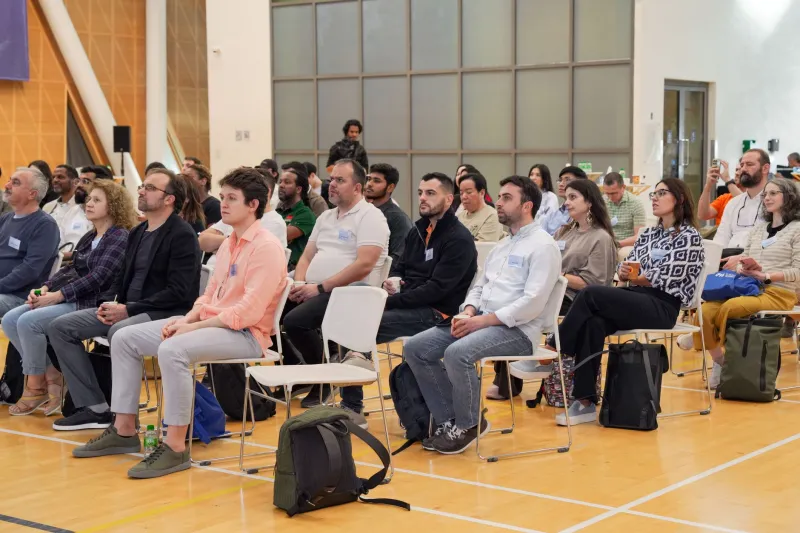
On a Thursday evening in 2026, a neighborhood organization on the South Side may open its monthly forum in a park district fieldhouse while a professional association downtown signs on from a conference room. A third cluster watches from living rooms across the city. The format is not new. The discipline around it is.
Hybrid town halls, public meetings that combine an in-person anchor with a live-streamed audience and structured follow-up, have become a common fixture of Chicago's civic calendar. Organizers have learned that a camera at the back of the room does not automatically widen participation. The groups reporting stronger turnout and steadier trust are the ones treating the online and offline rooms as two parts of one conversation, not as a main event with a webcast attached.
The Camera Is Not the Strategy
A common early mistake was to treat hybrid access as a broadcasting problem. Add a link, add a microphone, and call the meeting inclusive. In practice, Chicago groups have found that the hardest work happens before the stream begins. Who is invited to speak first? Which questions are gathered in advance? How will a comment offered in a chat window reach the people in the room, and how will a concern raised in the room reach the people watching from home?
Organizations that answer those questions in the planning stage tend to produce meetings that feel coherent. Those that leave them to the moderator tend to produce two parallel events: a live discussion with its own rhythm and an online audience that comments into a void. The difference is not the platform. It is the agenda.
Small Rooms Before the Big Room
The most effective variation in Chicago this year is the neighborhood check-in. Rather than asking residents to arrive at a single central venue, groups are hosting short, informal conversations in libraries, ward offices, community colleges, and block club gatherings in the weeks before the main forum. These sessions are not separate town halls. They are listening posts.
The check-ins serve two purposes. They give people who would not travel downtown or log on for a two-hour evening meeting a low-stakes way to contribute. They also give organizers a set of concrete concerns to bring into the main conversation. When the live-streamed forum opens, participants can see that the agenda reflects questions raised in specific neighborhoods. That visible connection between place and program does more for trust than a polished production.
Rotating Hosts and the Trust Dividend
Another shift is the rotating host model. Instead of anchoring every hybrid meeting at the same office or the same familiar venue, organizations are moving the in-person base among partner sites. A workforce group might meet in Pilsen one month and in Chatham the next. A civic association might pair a downtown conference room with a church hall or a park fieldhouse.
The rotation does more than share visibility. It signals that the organization is willing to go to where people already gather. It also distributes the logistical burden, which matters for small groups with limited staff. When a host site provides the room, the greeter, and the local knowledge, the central organization can focus on facilitation and follow-up.
The trade-off is consistency. Rotating hosts can confuse people who expect a fixed address. The groups that manage it well publish a clear annual schedule, keep the online link stable, and assign a single point of contact for each site. They treat rotation as a routing plan, not an improvisation.
Where Hybrid Formats Lose People
Hybrid meetings fail in predictable ways. Audio problems are the most visible, but they are rarely the deepest. More often, the weak point is the queue. Online attendees cannot see the room, and in-person attendees cannot see the chat. Without a moderator whose only job is to bridge the two, the conversation tilts toward whoever is physically present.
A second failure is overproduction. When organizers try to mimic a television broadcast, they can inadvertently make the meeting feel less participatory. Residents may watch rather than speak. The groups with the strongest engagement often use simpler setups: a clean audio feed, captions, a call-in option, and a printed summary for people who cannot use video.
A third failure is the missing follow-up. A hybrid town hall that ends without a published record of what was heard, what will happen next, and who is responsible for the next step can leave both audiences feeling managed rather than engaged. Trust is built in the weeks after the meeting, not only during it.
A Borrowed Playbook for Chicago Organizations
The playbook emerging across the city is practical rather than elaborate. It begins with a clear purpose. Organizers should be able to say whether the meeting is for information, consultation, or decision-making, and they should say it in the invitation.
From there, a few design rules travel well:
- Pair every online forum with at least one in-person check-in, even if the check-in is small and informal.
- Assign a dedicated online moderator and a dedicated in-room moderator. Do not ask one person to do both.
- Rotate host sites on a published schedule, and keep the online access point consistent.
- Publish a plain-language summary within a week, including questions that could not be answered live.
- Close the loop with follow-up circles, either online or in person, so participants can see how their input was used.
None of these steps requires a large budget. They require coordination and a willingness to treat the meeting as a relationship rather than an event.
For Chicago's community and professional organizations, the hybrid town hall is now a normal part of civic life. The groups that do it well are not the ones with the most cameras. They are the ones that design for two rooms at once, then make sure the people in both rooms can recognize themselves in the record that follows.